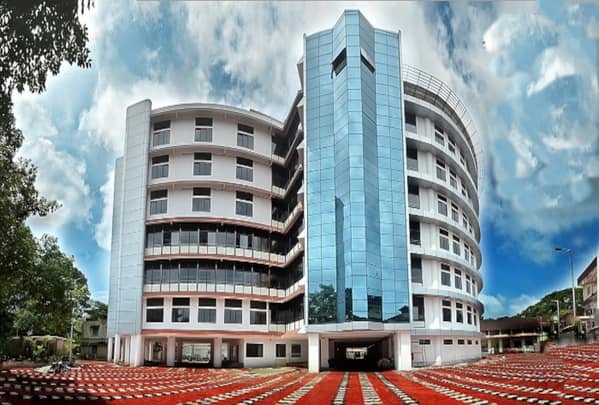
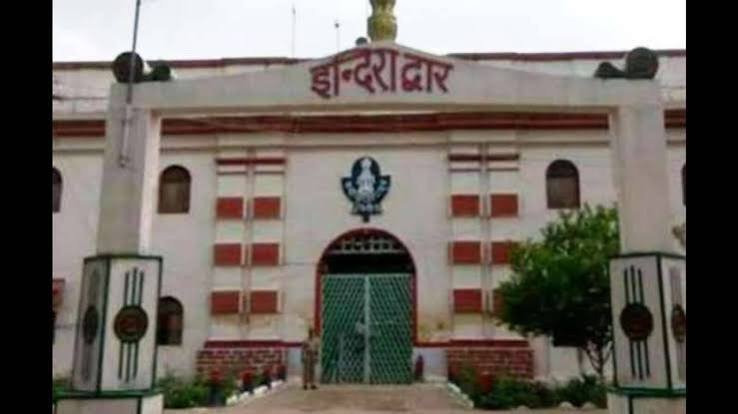
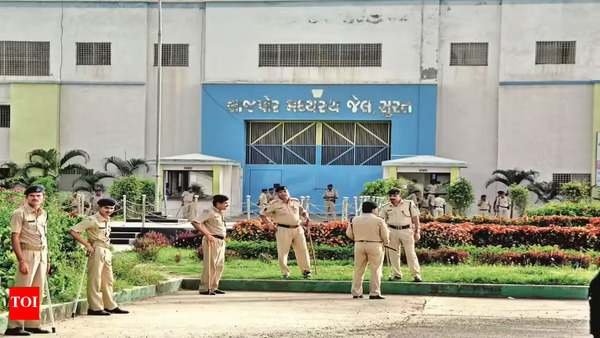
Lajpore Central Jail is Gujarat’s largest and most modern prison, built to solve the chronic overcrowding that plagued Surat’s older city jail. Located on the outskirts of Surat near Sachin, this high-capacity facility opened in the early 2010s and now houses thousands of inmates across a sprawling 55-acre campus. Unlike Ahmedabad’s Sabarmati or Pune’s Yerawada, Lajpore carries no colonial-era baggage — it’s a purpose-built 21st-century prison, yet it has still become a site tied to some of Gujarat’s more prominent legal and political cases.
| Quick Facts | Details |
|---|---|
| Full name | Lajpore Central Jail (also called Central Jail Surat) |
| Location | Lajpore village, near Sachin, Surat, Gujarat |
| Built | Completed around 2011 |
| Total campus area | Around 55 acres |
| Jail complex area | Roughly 25 acres |
| Rated capacity | Over 3,000 inmates |
| Status | Operational, functioning central prison |
| Managed by | Gujarat Prisons Department |
Where Exactly Is It Located
Lajpore Central Jail sits on the Surat–Navsari Highway, close to Lajpore village near Sachin, on the southern edge of Surat city. It’s tucked away from the city’s crowded core, in an area that has industrial estates, apparel parks, and residential colonies scattered around it.
- Address: Central Jail Lajpore, Surat–Navsari Highway, Lajpore, Sachin, Surat, Gujarat – 394230
- Nearby landmarks: Close to Hojiwala Industrial Estate and the Sachin GIDC industrial belt
- Access: Reachable via the Surat–Navsari Highway; well connected by road from central Surat and Sachin railway station
The surrounding area is a mix of small industrial units, apparel manufacturing zones, and semi-urban settlements — a fairly quiet stretch compared to the dense city center, which was part of the reasoning behind choosing this site.
Why Lajpore Was Built
For years, Surat’s old sub-jail in the city struggled to keep pace with a rising number of undertrial prisoners. The city needed a facility that could actually match the scale of a growing metro, so the state government commissioned a new central jail on the outskirts.
- Built at a cost of roughly Rs 60 crore
- Designed to hold more than 3,000 prisoners, a sharp jump from the old sub-jail’s limited capacity
- Constructed across 55 acres, with 25 acres dedicated to the main jail complex and the rest used for staff quarters, an open jail barrack, and security infrastructure
When it opened, Lajpore was described as Gujarat’s biggest and most modern correctional facility, equipped with features rarely seen in older Indian prisons — video conferencing rooms for legal proceedings, a library, an industrial shed, and a dedicated sports ground.
Facilities Inside the Jail
Lajpore was designed with rehabilitation in mind, not just detention, and this shows in how the campus is laid out.
- Separate barracks for different categories of inmates, including undertrials and convicted prisoners
- A prison hospital block for basic medical care
- Industrial sheds supporting vocational and skill-based work programs
- Indoor games facilities and an outdoor sports ground
- Video conferencing setup, allowing court hearings without physically transporting prisoners
One of the more unusual programs here is a diamond-polishing initiative, where trained inmates cut and polish small natural diamonds as part of a skill-development and livelihood scheme — a nod to Surat’s identity as India’s diamond-cutting capital.
Notable Cases and Inmates
Being Surat’s primary central jail, Lajpore has held a range of undertrials and convicts connected to political and criminal cases over the years.
- Hardik Patel – the Patidar Anamat Andolan Samiti (PAAS) leader was held here on sedition charges and released after roughly nine months in custody, amid a large gathering of supporters
- Numerous undertrials connected to cases originating in and around Surat, given the jail’s role as the district’s primary central prison
The jail has also drawn attention from human rights bodies. A National Human Rights Commission visit report flagged concerns around medical staffing and conditions in the tuberculosis isolation barracks, pointing to gaps that are common across India’s overcrowded prison system.
Education and Reform Initiatives
Lajpore runs one of the more active inmate-education programs among Gujarat’s prisons.
- Inmates regularly appear for Class 10 and Class 12 board exams while serving their sentences
- Health outreach programs, including skin-care and dermatology camps, have been conducted for inmates by external medical teams
- Vocational training, including diamond polishing, gives prisoners marketable skills for life after release
These programs reflect a broader shift in how Gujarat’s newer prisons are designed — less about pure containment, and more about giving inmates a path back into society.
Can You Visit Lajpore Jail
Lajpore is not open to the general public, since it functions as an active central prison holding thousands of inmates, including undertrials in serious criminal cases. Visits are generally restricted to legal counsel, approved family members, and officials, following standard jail visitation rules.
FAQs
Q1: When was Lajpore Central Jail built?
A. Construction was completed around 2011, making it one of the newest central jails in Gujarat compared to older facilities like Sabarmati.
Q2: Why was Lajpore built instead of expanding Surat’s old jail?
A. The old Surat sub-jail couldn’t handle the rising number of undertrial prisoners, so the state built a larger, modern facility with over 3,000 capacity at Lajpore instead.
Q3: Is Lajpore the largest jail in Gujarat?
A. Yes, it’s often described as Gujarat’s biggest and most modern prison by capacity, surpassing older facilities like Sabarmati Central Jail in Ahmedabad.
Q4: Can family members meet inmates at Lajpore Jail?
A. Yes, family visits are allowed under standard jail procedures, though general public entry isn’t permitted since it’s an active, high-capacity central prison.