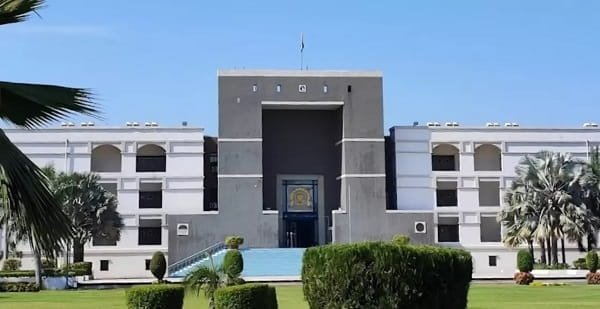
The High Court of Gujarat — seated at Sola, Ahmedabad, the commercial and cultural capital of India’s westernmost state — is one of India’s most forward-thinking, digitally progressive, and institutionally respected superior courts. Established on May 1, 1960, the same day the state of Gujarat came into existence following the bifurcation of the former Bombay State, the Gujarat High Court has served India’s most industrially and commercially dynamic state for over six decades with constitutional commitment, judicial excellence, and a pioneering spirit in technology adoption that has earned it national recognition. The court holds the singular distinction of being the first High Court in India to live stream its judicial proceedings — a milestone in judicial transparency that Gujarat established before any other superior court in the country and that has since inspired a national movement toward open court proceedings. With jurisdiction over India’s fifth-largest state by GDP and one of its most commercially active, the Gujarat High Court adjudicates a vast and diverse range of disputes spanning industrial and commercial law, constitutional rights, environmental protection, and access to justice for over 70 million citizens across 33 districts.
History and Establishment
The Gujarat High Court’s birth is inseparable from the historic formation of the state itself. On May 1, 1960, the Bombay Reorganisation Act, 1960 bifurcated the former State of Bombay into two separate states — Maharashtra and Gujarat — based on linguistic identity and geographic considerations. On that founding day, the High Court of Gujarat came into existence simultaneously with the state, beginning its operations near Akashwani Bhawan in Navrangpura, Ahmedabad.
Justice Sunderlal Trikamlal Desai was appointed the first Chief Justice of the Gujarat High Court, joined at inception by four distinguished puisne judges — Justice K.T. Desai, Justice J.M. Shelat, Justice N.M. Miabhoy, and Justice V.B. Raju — a bench that gave the new court intellectual authority and professional gravitas from its very first sitting. The court began with a legacy built on the solid foundations of the Bombay High Court’s traditions, carrying forward the procedural sophistication and legal culture of its predecessor institution while building an independent identity suited to the unique commercial, agricultural, and social character of Gujarat.
The court’s most significant physical transformation arrived on January 16, 1999, when it shifted to its current state-of-the-art premises at Sola on the Sarkhej-Gandhinagar Highway in Ahmedabad — a modern campus that has been developed progressively over the decades and in December 2024 saw new infrastructure projects worth Rs 133 crore launched and completed, reflecting the sustained governmental commitment to judicial infrastructure. Gujarat Chief Minister Bhupendra Patel presided over the December 2024 infrastructure launch alongside Supreme Court Justice Suryakant and Chief Justice Sunita Agarwal — affirming the collaborative spirit between the state government and judiciary that has made Gujarat’s judicial infrastructure investment one of India’s most consistent.
Jurisdiction and Powers
The Gujarat High Court exercises the complete constitutional jurisdiction of a superior court under Articles 214 to 231 of the Constitution over the entirety of Gujarat — all 33 districts and their subordinate district courts, family courts, tribunals, and administrative authorities. Its writ jurisdiction under Articles 226 and 227 empowers the court to issue all five constitutional writs — habeas corpus, mandamus, certiorari, prohibition, and quo warranto — as the constitutional guardian of fundamental rights for every citizen of Gujarat.
The court exercises appellate and second appellate jurisdiction over civil and criminal decisions of subordinate courts, supervisory jurisdiction under Article 227 over every court and tribunal in the state, and Letters Patent appellate jurisdiction — where intra-court appeals lie from Single Judge decisions to Division Benches of two judges under Clause 15 of the Letters Patent. This Letters Patent jurisdiction, inherited from the Bombay High Court tradition, gives the Gujarat High Court an additional tier of internal appellate review that strengthens the quality and consistency of its jurisprudence.
Gujarat’s dominant commercial and industrial character gives the court a particularly rich jurisdiction in commercial disputes, industrial law, taxation matters, environmental litigation relating to industrial pollution, land acquisition cases connected to infrastructure and industrial development, and maritime and port-related matters arising from Gujarat’s extensive 1,600-kilometre coastline — the longest of any Indian state.
Structure, Composition, and Key Facts
| Dimension | Detail |
| Established | May 1, 1960 — under Bombay Reorganisation Act, 1960 |
| First Chief Justice | Justice Sunderlal Trikamlal Desai |
| Original location | Near Akashwani Bhawan, Navrangpura, Ahmedabad |
| Current location | Sarkhej-Gandhinagar Highway, Sola, Ahmedabad — 380060 |
| Shifted to Sola | January 16, 1999 |
| Sanctioned judge strength | 52 judges (39 permanent + 13 additional) |
| Working strength (2025) | 35 judges |
| Jurisdiction | All 33 districts of Gujarat |
| Chief Justice (2025) | Justice Sunita Agarwal |
| Infrastructure investment (2024) | Rs 133 crore — projects launched and completed |
| National distinction | First High Court in India to live stream proceedings |
Digital Pioneer — India’s First Live Streaming High Court
The Gujarat High Court’s most nationally celebrated distinction is the one that belongs to it uniquely and permanently — it was the first High Court in India to live stream its judicial proceedings, earning recognition as a pioneer of judicial transparency that set a standard subsequently adopted by courts across the country and ultimately encouraged by the Supreme Court itself.
The court’s Information Technology Cell implemented an in-house technical solution for live streaming using computer systems, webcameras, digital audio interfaces, and public address systems — equipping every courtroom with microphones and speakers for both the bench and advocates, facilitating easier communication and simultaneous public viewing. This live streaming infrastructure, originally developed during the COVID-19 period of virtual hearings, was maintained even after the court resumed physical functioning from August 17, 2021 — demonstrating a conviction that judicial transparency through live streaming was a permanent value rather than a temporary pandemic adaptation.
In December 2024, Gujarat Chief Minister Bhupendra Patel formally announced that Gujarat had become the first state in India to telecast live court proceedings on YouTube — extending the court’s digital transparency achievement from its own platform to the world’s largest video streaming platform, making Gujarat High Court proceedings accessible to any citizen anywhere in the world with internet access.
| Digital Achievement | Detail |
| First HC in India to live stream proceedings | Pioneering national distinction |
| YouTube live streaming | First state — December 2024 |
| Virtual courts adopted | Paperless e-filing, digital portals |
| Email Case Status Service | Automatic email updates for any registered case |
| E-filing | Paperless filing system implemented |
| Principal Civil Judge courts | Made functional at every taluka station in Gujarat |
Beyond live streaming, the Gujarat High Court has implemented an Email My Case Status Service — a country-first initiative providing automatic email updates on any case to any registered user, ensuring that litigants receive hearing date notifications and order alerts without needing to visit the court or check portals manually. Virtual courts, digital portals, and paperless e-filing approaches have all been adopted by the Gujarat judiciary — with the state government’s commitment to fully funding this digital infrastructure described by the Chief Minister as aligned with Prime Minister Narendra Modi’s vision of digital infrastructure for transparent and efficient governance.
Frequently Asked Questions
Q: When was the Gujarat High Court established?
A: The Gujarat High Court was established on May 1, 1960, the same day the state of Gujarat came into existence, under the Bombay Reorganisation Act, 1960.
Q: Where is the Gujarat High Court located?
A: The court is located at Sola, on the Sarkhej-Gandhinagar Highway, Ahmedabad — Gujarat 380060. It shifted to this campus from its original Navrangpura premises on January 16, 1999.
Q: Who was the first Chief Justice of the Gujarat High Court?
A: Justice Sunderlal Trikamlal Desai was the first Chief Justice of the Gujarat High Court.
Q: What is the sanctioned judge strength of the Gujarat High Court?
A: The sanctioned strength is 52 judges — comprising 39 permanent judges and 13 additional judges. As of 2025, 35 judges are working.
Q: What is the Gujarat High Court’s most celebrated national distinction?
A: The Gujarat High Court was the first High Court in India to live stream its judicial proceedings. In December 2024, Gujarat also became the first state to telecast live court proceedings on YouTube.
Q: Does the Gujarat High Court have benches outside Ahmedabad?
A: No. The Gujarat High Court operates from a single principal seat at Sola, Ahmedabad, with no permanent benches in other cities.
Q: What is Letters Patent appellate jurisdiction?
A: Under Clause 15 of the Letters Patent inherited from the Bombay High Court tradition, intra-court appeals lie from decisions of a Single Judge to a Division Bench of two judges within the Gujarat High Court itself.
Q: What types of cases does the Gujarat High Court hear?
A: The court hears writ petitions, civil and criminal appeals, commercial disputes, taxation matters, industrial law cases, environmental litigation, land acquisition matters, service disputes, bail applications, and public interest litigation across Gujarat’s 33 districts.
Q: Can judgments of the Gujarat High Court be appealed?
A: Yes. Judgments can be appealed to the Supreme Court of India through statutory appeal or through a Special Leave Petition under Article 136 of the Constitution.
Q: What makes the Gujarat High Court nationally significant?
A: Its pioneering role in live streaming judicial proceedings — establishing India’s first live-streamed High Court — alongside its jurisdiction over India’s most commercially dynamic and industrially active state, and its consistent investment in digital infrastructure that has made it a national model for judicial transparency and technological innovation.