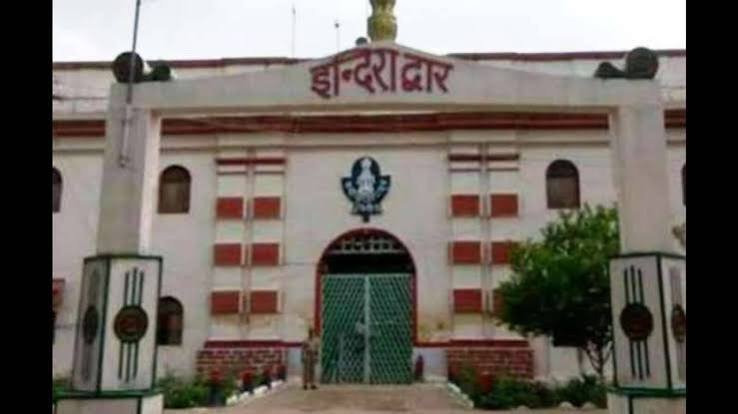
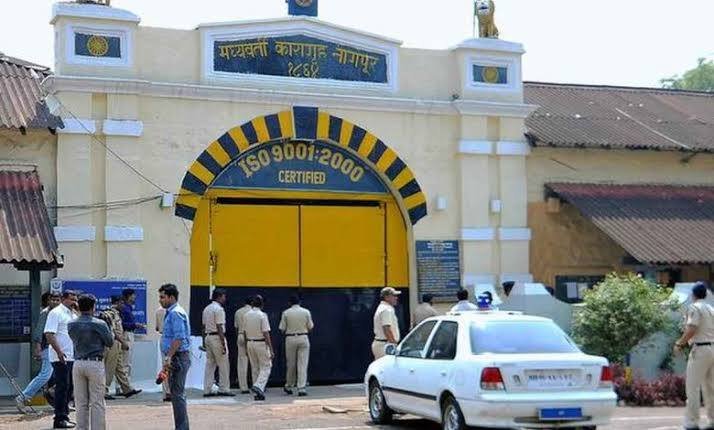
Nagpur Central Jail is one of Maharashtra’s oldest correctional facilities, sitting right in the heart of the city at Ajni since 1864. Built when Nagpur had barely a single police station to its name, this century-and-a-half-old prison has witnessed everything from freedom fighters like Khubchand Baghel serving time here to a dramatic 1922 escape by a Gadar Party revolutionary from a moving train while being transferred to this very jail. Now chronically overcrowded, the facility is set for a major transformation, with plans underway to shift it to a sprawling new 450-acre campus outside the city.
| Quick Facts | Details |
|---|---|
| Full name | Nagpur Central Jail (Nagpur Central Prison) |
| Location | Ajni, Nagpur, Maharashtra |
| Established | 1864 |
| Current area | 118 acres |
| Authorised capacity | 1,900 inmates |
| Actual population | Around 2,900 inmates |
| Status | Operational; relocation to a new 450-acre site under planning |
| Managed by | Maharashtra Prisons Department |
Where Exactly Is It Located
Nagpur Central Jail sits at Ajni, right in the heart of Nagpur city — a stark contrast to most other central jails of its era, which were typically built on the city’s outskirts. Over the decades, Nagpur’s urban expansion has essentially grown around the prison rather than the other way round.
- Address: Central Jail, Ajni, Nagpur, Maharashtra
- Nearby landmark: Close to Ajni Railway Station and central Nagpur’s civic hub
- Access: Well connected via Nagpur’s city bus network and easily reachable by auto or cab from most parts of the city
Being located so centrally has actually worked against the jail in recent years, contributing to the administration’s decision to look for a much larger site further out.
The Origins: Built in 1864
Nagpur Central Jail was established in 1864, at a time when the city itself was still a relatively modest settlement with just one police station covering the entire area. This places it among the older generation of central prisons built across British-administered India during the mid-19th century, alongside contemporaries like Rajahmundry and Kannur.
- Built to house long-term convicts under the same broad colonial prison-reform policy that produced several other central jails of the era
- Has operated continuously at the same Ajni site for over 160 years
- Spread across 118 acres, considerably smaller than some of India’s larger central prisons but still substantial for a facility sitting inside city limits
Freedom Fighters Held at Nagpur Jail
Like many of India’s colonial-era central prisons, Nagpur Jail has its own chapter in the independence movement.
- Khubchand Baghel, regarded as the father of modern Chhattisgarh for his role in the region’s political awakening, was imprisoned here for six months along with his wife Rajkunwar Devi for their involvement in the freedom struggle.
- Baba Prithvi Singh Azad, a founding member of the Gadar Party who had been sentenced to death in the Lahore Conspiracy Case, made a dramatic escape from a running mail train in November 1922 while being transferred to Nagpur Central Jail from the Andaman’s Cellular Jail. He went on to live underground for sixteen years before eventually surrendering to Mahatma Gandhi in 1938.
These episodes tie Nagpur Jail into the broader network of colonial-era prisons that held and transferred political prisoners across British India during the freedom struggle.
Chronic Overcrowding
In recent years, Nagpur Central Jail has struggled significantly with capacity pressures.
- Authorised to hold 1,900 inmates, the jail currently houses around 2,900, putting it roughly 1,000 inmates over capacity
- This overcrowding has become one of the key drivers behind the state’s decision to plan a completely new facility
Plans for a New 450-Acre Central Jail
Given the mounting pressure on the existing facility, Maharashtra’s prison administration has begun actively searching for land to build an entirely new Nagpur Central Jail.
- The proposed new facility would span 450 acres, nearly four times the size of the current campus
- The plan includes a dedicated 150-acre open jail section specifically for women prisoners
- The proposal has been sent to a district-level committee chaired by the Principal District Judge, with search teams from the Revenue and Prison Departments actively identifying suitable reserved land across the district
- Officials have stated the new jail is being designed to meet the region’s prison needs for the next 100 years
As of the most recent reporting, this remains in the planning and land-identification stage rather than under active construction, so the existing Ajni facility continues to function as Nagpur’s primary central jail for now.
Can You Visit Nagpur Central Jail
Nagpur Central Jail is not open to the general public, since it functions as an active correctional facility holding convicts and undertrials. Visits are restricted to legal representatives and approved family members, subject to standard jail procedures.
FAQs
Q1: How old is Nagpur Central Jail?
A. It was established in 1864, making it well over 160 years old and one of the older central prisons still operating in Maharashtra.
Q2: Is Nagpur Central Jail being relocated?
A. Yes, the state government has proposed shifting it to a new 450-acre site outside the city, though the project is still in the land-search and planning stage as of the latest available information.
Q3: How overcrowded is Nagpur Central Jail?
A. It’s authorised for 1,900 inmates but currently houses close to 2,900, making it roughly 1,000 prisoners over its rated capacity.
Q4: Were any notable freedom fighters held at Nagpur Jail?
A. Yes, including Khubchand Baghel, regarded as the father of modern Chhattisgarh, who was imprisoned here along with his wife during the independence movement.