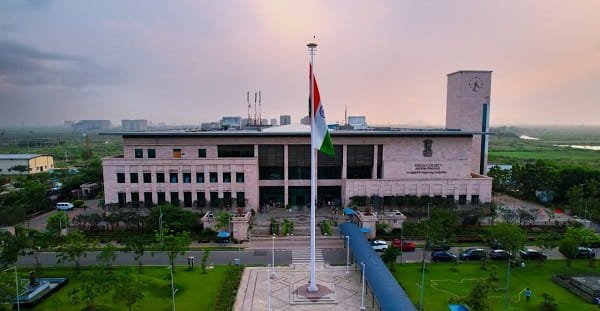
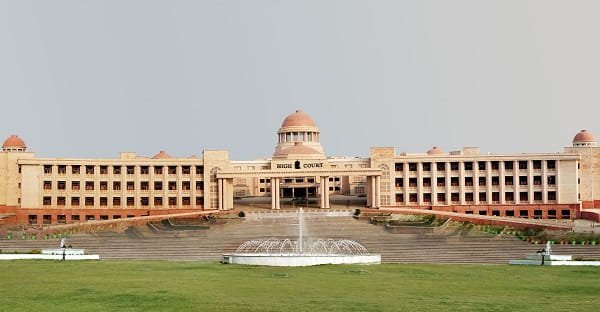
The High Court of Judicature at Allahabad, Lucknow Bench — universally known as the Lucknow High Court — is the permanent bench of India’s largest High Court, seated in the City of Nawabs, Lucknow, the administrative capital of Uttar Pradesh. While the term Lucknow High Court is widely used in common parlance, it is important to understand that it is formally the Lucknow Bench of the High Court of Judicature at Allahabad — a permanent, fully empowered bench of India’s oldest and largest High Court that exercises the complete jurisdiction of the parent court over matters arising in the Avadh region and a substantial portion of Uttar Pradesh. The Lucknow Bench carries within it one of India’s most historically distinguished judicial legacies — rooted in the traditions of the Chief Court of Oudh, a court that attracted the most eminent lawyers from across British India including Mohammad Ali Jinnah, Sir Rash Behari Ghosh, and Sir Tej Bahadur Sapru to argue before it. Housed today in a modern, purpose-built campus at Gomti Nagar spread across 40 acres and equipped with 57 courtrooms and every contemporary judicial facility, the Lucknow Bench serves millions of litigants from the Avadh region and beyond as an indispensable pillar of justice delivery in India’s most populous state.
History and Establishment
The judicial heritage of Lucknow stretches back to 1856, when the highest court in Oudh — then a region of 12 districts — was established with a Judicial Commissioner presiding over it. As Oudh grew in administrative and commercial importance and its legal needs expanded, the Judicial Commissioner’s Court was found inadequate, leading the United Provinces Legislature to pass the Oudh Courts Act, U.P. Act IV of 1925, with the previous sanction of the Governor-General. This landmark legislation abolished the Judicial Commissioner’s Court and established in its place the Chief Court of Oudh at Lucknow on November 2, 1925 — a proper court of record with a Chief Judge and four puisne judges, vested with comprehensive appellate and supervisory jurisdiction over the 12 districts of Avadh and original civil jurisdiction over suits valued above Rs 5 lakh.
The Chief Court of Oudh became renowned throughout India for a unique class of litigation — succession cases arising under the Oudh Estates Act, 1869, known as Taluqa cases, that attracted the greatest legal talents of the era to Lucknow’s courts. The court’s reputation drew advocates of the stature of Mohammad Ali Jinnah from Bombay, Sir Rash Behari Ghosh from Calcutta, Sir Tej Bahadur Sapru from Allahabad, and Sir Ali Imam from Patna — making Lucknow one of British India’s most intellectually distinguished centres of legal practice.
The defining institutional transformation arrived on February 25, 1948, when the United Provinces High Courts Amalgamation Order 1948, issued under Section 229 of the Government of India Act 1935, amalgamated the Chief Court of Oudh with the High Court of Judicature at Allahabad, creating a unified High Court for the entire United Provinces. The Amalgamation Order specifically preserved Lucknow’s judicial role — providing by its proviso to paragraph 14 that not less than two judges of the new High Court, as nominated by the Chief Justice from time to time, shall sit in Lucknow to dispose of cases arising in Oudh. This provision, which has grown into the permanent bench of today, ensured that the judicial traditions of Lucknow were honoured and maintained within the unified court structure.
Jurisdiction and Powers
The Lucknow Bench of the Allahabad High Court exercises the full constitutional jurisdiction of the parent court — Articles 226 and 227 of the Constitution — over matters arising within its territorial jurisdiction. The bench issues all five constitutional writs — habeas corpus, mandamus, certiorari, prohibition, and quo warranto — for the protection of fundamental rights of citizens from the Avadh and surrounding districts of Uttar Pradesh that fall within its remit. It exercises appellate jurisdiction over civil and criminal decisions of subordinate courts in its jurisdictional districts, supervisory jurisdiction over all subordinate courts and tribunals in its area, and handles bail applications, criminal revisions, service matters, taxation disputes, writ petitions, and public interest litigation with the same authority as the principal bench at Prayagraj.
The Lucknow Bench is administered by a Senior Judge designated for administrative purposes, and judges are permanently posted at Lucknow — with additional judges including the Chief Justice visiting Lucknow from Prayagraj periodically as judicial needs demand. The bench has grown substantially from the original minimum of two judges envisaged by the 1948 Amalgamation Order to a fully staffed permanent seat with multiple Single Benches and Division Benches operating simultaneously to serve the significant volume of litigation from Uttar Pradesh’s politically, commercially, and administratively important capital city.
Structure, Composition, and Key Facts
| Dimension | Detail |
| Parent Court | High Court of Judicature at Allahabad — established 1866 |
| Chief Court of Oudh established | November 2, 1925 — predecessor institution |
| Amalgamation into Allahabad HC | February 25, 1948 — UP High Courts Amalgamation Order |
| Location | Gomti Nagar, Vibhuti Khand, Lucknow — 226010 |
| Campus area | 40 acres — Gomti Nagar |
| Courtrooms | 57 courtrooms — all modern facilities |
| Administrative head at bench | Senior Judge — designated for administrative matters |
| Parent court sanctioned strength | 160 judges including Chief Justice |
| Jurisdiction origin | 12 districts of Avadh — now expanded |
| Working hours | Monday to Friday — 10:00 AM to 5:00 PM |
| Website | allahabadhighcourt.in |
The Lucknow Bench operates through Division Benches for constitutional matters, first appeals of significance, and criminal appeals requiring two-judge consideration, and Single Benches for writ petitions, bail applications, revisions, and first instance matters. The Senior Administrative Judge at Lucknow handles the day-to-day administrative coordination between the bench and the principal seat at Prayagraj — ensuring that roster assignments, court allocations, and case management decisions reflect the Chief Justice’s authority over the court as a unified institution while respecting the practical operational autonomy that a geographically distant bench requires.
The Gomti Nagar Campus — A Modern Judicial Infrastructure
| Campus Feature | Detail |
| Location | Vibhuti Khand, Gomti Nagar, Lucknow |
| Land area | 40 acres |
| Courtrooms | 57 — fully equipped, modern facilities |
| Address | Chamber No. 311, Block-E, High Court, Vibhuti Khand |
| Contact | 0522-2722680 |
| Old Lucknow bench building | Handed over to District Judgeship Lucknow on October 4, 2018 |
| Old building current use | 25 courts of District & Sessions Judge and ADJ courts |
| Digital infrastructure | Virtual hearings, e-filing, case management systems |
| Bar Association | Avadh Bar Association — Lucknow |
The new Lucknow Bench campus at Gomti Nagar represents a landmark investment in Uttar Pradesh’s judicial infrastructure — a purpose-built, 40-acre modern High Court facility that provides 57 fully equipped courtrooms, dedicated chambers, modern amenities, and digital infrastructure that meets every contemporary requirement of a major superior court. The old High Court building in Lucknow — the historic seat where the Chief Court of Oudh’s traditions were maintained through the decades following amalgamation — was handed over to the District Judgeship Lucknow on October 4, 2018, and now houses 25 courts of the District and Sessions Judge and Additional District Judge courts, continuing its judicial function at the subordinate court level.
The Avadh Bar — A Legal Heritage of National Importance
The Avadh Bar Association at Lucknow carries one of North India’s richest legal cultural traditions — rooted in the era of the Chief Court of Oudh when Lucknow’s legal culture attracted the finest advocates in the country. The tradition of legal excellence established when Taluqa cases brought Mohammad Ali Jinnah, Sir Rash Behari Ghosh, and Sir Tej Bahadur Sapru to argue before the Lucknow court has continued through generations of distinguished advocates who have built their careers at the Lucknow Bench — producing judges elevated to the parent Allahabad High Court and beyond, and maintaining the high standards of legal scholarship and advocacy that the Chief Court’s distinguished history demands.
Lucknow’s identity as a city of culture, refinement, and intellectual tradition — the capital of the Nawabs, a centre of Urdu poetry, classical music, and artistic achievement — has always infused its legal culture with a particular grace and depth that makes the Avadh Bar distinct in character from the bars of other superior courts. The Lucknow Bench sits within this cultural context as a judicial institution that has always been more than the sum of its procedural functions — a place where the administration of justice carries the additional weight of centuries of civilisational heritage.
Frequently Asked Questions
Q: Is the Lucknow High Court a separate High Court?
A: No. The Lucknow High Court is the permanent bench of the High Court of Judicature at Allahabad — officially called the High Court of Judicature at Allahabad, Lucknow Bench. There is only one High Court for Uttar Pradesh, with its principal seat at Prayagraj and its permanent bench at Lucknow.
Q: When was the Lucknow Bench established?
A: The Lucknow Bench as part of the Allahabad High Court was established on February 25, 1948, when the Chief Court of Oudh was amalgamated with the Allahabad High Court under the United Provinces High Courts Amalgamation Order 1948. The predecessor Chief Court of Oudh at Lucknow existed from November 2, 1925.
Q: Where is the Lucknow High Court located?
A: The Lucknow Bench is located at Vibhuti Khand, Gomti Nagar, Lucknow — Uttar Pradesh 226010, in a modern campus spread across 40 acres.
Q: How many courtrooms does the Lucknow Bench have?
A: The Lucknow Bench has 57 courtrooms in its modern Gomti Nagar campus, all equipped with contemporary judicial facilities.
Q: What was the predecessor court to the Lucknow Bench?
A: The predecessor institution was the Chief Court of Oudh at Lucknow, established on November 2, 1925, which replaced the Oudh Judicial Commissioner’s Court. Before that, the highest court in Oudh was established in 1856 with a Judicial Commissioner presiding.
Q: What is the jurisdiction of the Lucknow Bench?
A: The Lucknow Bench exercises the full jurisdiction of the Allahabad High Court over matters arising from the Avadh region and designated districts of Uttar Pradesh — hearing writ petitions, civil and criminal appeals, bail applications, service matters, taxation disputes, and public interest litigation.
Q: What was the Chief Court of Oudh known for historically?
A: The Chief Court of Oudh was nationally famous for Taluqa cases — succession cases under the Oudh Estates Act 1869 — that attracted eminent lawyers including Mohammad Ali Jinnah, Sir Rash Behari Ghosh, Sir Tej Bahadur Sapru, and Sir Ali Imam to appear before it.
Q: Who administers the Lucknow Bench?
A: A Senior Judge designated by the Chief Justice handles administrative matters at the Lucknow Bench. The Chief Justice exercises overall authority over both the principal seat at Prayagraj and the Lucknow Bench.
Q: What happened to the old Lucknow High Court building?
A: The old Lucknow Bench building was handed over to the District Judgeship Lucknow on October 4, 2018. It now houses 25 courts of the District and Sessions Judge and Additional District Judge level courts.
Q: Can cases filed at Lucknow be transferred to Allahabad?
A: The Chief Justice has the power to transfer cases between the Lucknow Bench and the principal seat at Prayagraj as administrative and judicial needs require, under the authority vested in the Chief Justice over the court as a unified institution.