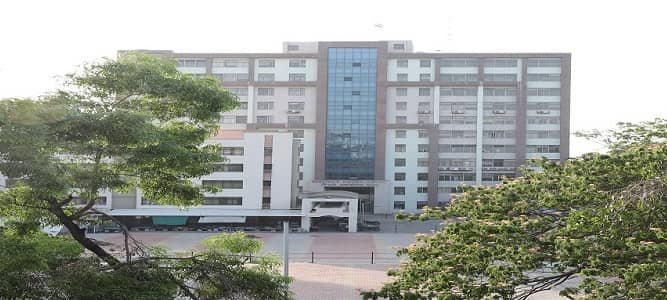
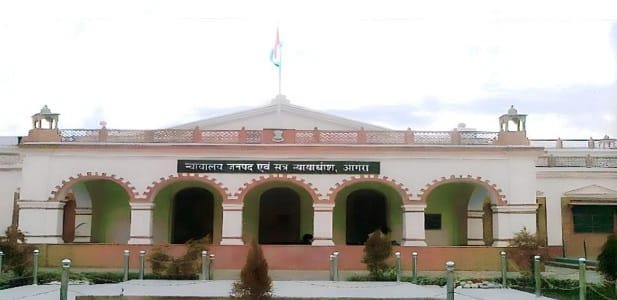
The District and Sessions Court Agra — the apex trial court for the Agra Judgeship in the state of Uttar Pradesh — holds a judicial heritage so exceptional that no other district court in India can match it: its principal court building is the very building that served as the original seat of the High Court of Judicature for the North-Western Provinces — established by Letters Patent of Her Majesty Queen Victoria dated March 17, 1866, at Agra. The High Court was shifted to Allahabad in the year 1869, and thereafter this building became the Court of District Judge Agra. This extraordinary continuity — a district court functioning in the same building that was once the High Court of a vast province — gives the Agra District Court a unique architectural and constitutional dignity. The court serves one of India’s most internationally known cities, home to the Taj Mahal — a UNESCO World Heritage Site — and under the supervision of the Allahabad High Court at Prayagraj.
History
The heritage building that now houses the Agra District Court carries a judicial history that begins with the Sadar Dewani Adalat and Sadar Nizamat Adalat — the highest civil and criminal courts of the British period in the North-Western Provinces. Sadar Dewani Adalat and Sadar Nizamat Adalat was established on January 1, 1832 in this building. These courts were the apex judicial institutions for the vast North-Western Provinces territory before the consolidation of India’s judicial system under the High Courts Act of 1861.
The establishment of the High Court of Judicature for the North-Western Provinces at Agra in 1866 — by the same Letters Patent that created the Allahabad High Court — was a momentous event in Indian judicial history. The court began functioning in Agra, with Sir Walter Morgan as the first Chief Justice. The High Court was shifted to Allahabad in the year 1869, and thereafter this building became the Court of District Judge Agra.
Agra itself carries extraordinary civilisational depth as a judicial location — the city served as the Mughal capital as Akbarabadunder Emperor Akbar, was the birthplace of Shah Jahan’s architectural genius including the Taj Mahal (completed 1653), and came under the British Raj in 1803. In 1835, when the Presidency of Agra was established by the British, the city became the seat of government. The District Court building renovation was completed in March 2013 and the District Judge’s Court began functioning again from this historic building — an act of institutional and architectural continuity that connects the present court directly to its 1832 origins.
Structure and Composition
| Dimension | Detail |
| Sadar Dewani and Nizamat Adalat established | January 1, 1832 — in the present heritage building |
| Original High Court at Agra | Established March 17, 1866 — by Letters Patent of Queen Victoria |
| High Court shifted to Allahabad | 1869 — building became District Judge’s Court |
| Building renovation completed | March 2013 — District Judge’s Court restored |
| Location | Near Bhagwan Talkies, Agra, Uttar Pradesh |
| High Court supervision | Allahabad High Court, Prayagraj |
| Courts functioning | 63 courts — 61 functional |
| Agra’s distinction | One of the largest District Courts in Uttar Pradesh |
| Outlying court | Fatehabad |
| Agra’s historic identity | Former Mughal capital Akbarabad — Taj Mahal city |
| Digital services | eCourts Mission Mode — CIS, KIOSK machine, e-filing, case status |
| KIOSK facility | Installed — litigants can check case status via KIOSK machines |
Architecture — The 1832 Heritage Building
The Agra District Court heritage building is one of India’s most constitutionally significant judicial structures — having served successively as the seat of the Sadar Dewani Adalat and Sadar Nizamat Adalat from 1832, as the first High Court of North-Western Provinces from 1866 to 1869, and continuously as the District Judge’s Court thereafter. This unbroken judicial occupation of a single building across nearly 200 years is perhaps unique in India’s district court landscape.
The renovation completed in March 2013 — which restored the building to a condition allowing the District Judge’s Court to function from it again — was an act of architectural conservation as much as judicial administration. The building stands in Agra, a city whose architectural landscape is defined by the Taj Mahal, Agra Fort, and Fatehpur Sikri — all UNESCO World Heritage Sites — giving the heritage court building a physical context of extraordinary architectural richness. The court campus also includes the outlying court at Fatehabad, extending the Agra Judgeship’s reach across the district’s geographic extent.
Frequently Asked Questions
Q: What makes the Agra District Court building historically unique?
A: It was the original building of the High Court of North-Western Provinces established in 1866 — the same building that housed the Sadar Dewani Adalat from 1832 and became the District Judge’s Court after the High Court shifted to Allahabad in 1869.
Q: When was the Sadar Dewani Adalat established in the Agra building?
A: January 1, 1832.
Q: When was the High Court of North-Western Provinces established at Agra?
A: March 17, 1866 — by Letters Patent of Queen Victoria.
Q: When did the High Court shift from Agra to Allahabad?
A: 1869.
Q: When was the heritage building renovation completed?
A: March 2013 — the District Judge’s Court resumed functioning from the restored heritage building.
Q: How many courts function at Agra?
A: 63 courts — 61 functional — making it one of the largest district courts in Uttar Pradesh.
Q: Which High Court supervises the Agra District Court?
A: The Allahabad High Court, Prayagraj.
Q: What digital facilities are available?
A: KIOSK machines for litigants to check case status, e-filing, Case Information System, and eCourts portal integration.