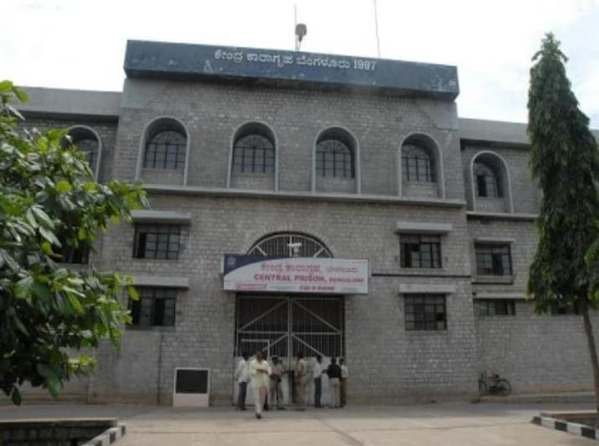
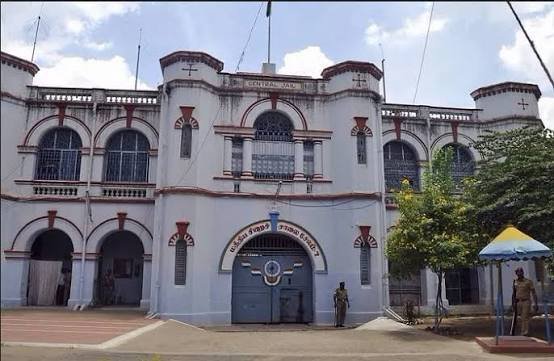
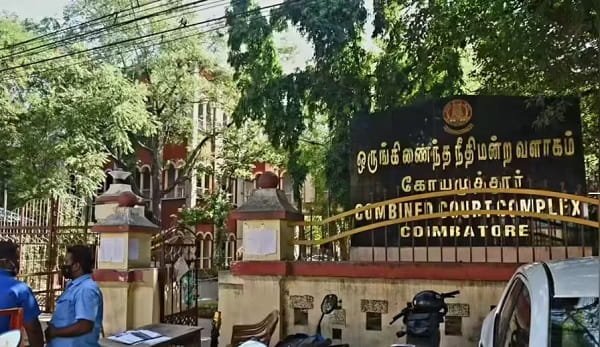
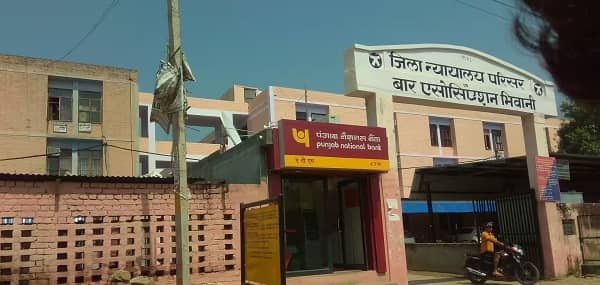
The District Court Bhiwani — the apex trial court for the Bhiwani Sessions Division in the state of Haryana — is a relatively young but institutionally vibrant district court serving a city known historically as Chhoti Kashi — the Little Varanasi of India — for the abundance of its temples and the depth of its religious traditions. The Bhiwani District Court came into existence on December 22, 1972, and was formally inaugurated on January 14, 1973. Sh. R.S. Gupta was the first District and Sessions Judge, Bhiwani. Under the supervision of the Punjab and Haryana High Court at Chandigarh, the court serves a district spread over 5,099 square kilometres, situated 124 kilometres from Delhi and 285 kilometres from Chandigarh — a centrally located district in western Haryana that connects to major commercial and industrial centres across the region.
History
The District of Bhiwani is situated between latitudes 28.19 degrees and 29.05 degrees and longitudes 75.28 degrees and 76.28 degrees. It is bounded in the north by Hisar district, in the east by Rohtak district, in the south by Mahendergarh district of Haryana and Jhunjhunu district of Rajasthan, and in the west by Churu district and a part of Jhunjhunu district of Rajasthan. By road, District Bhiwani is connected with cities like Delhi, Rohtak, Pilani, and Jaipur, and by rail it is connected with Delhi, Mathura, Malda Town, Jaipur, Firozpur, Chandigarh, and Amritsar.
There are two main industrial units in Bhiwani — Bhiwani Textile Mills established in 1937 and T.I.T. Mills established in 1943, set up by the well-known Birla Group. There is also a Technical Institute of Textile — a renowned educational institution opened and run by the Birla family — besides many other important Technical and Engineering Institutes in District Bhiwani. It has been a centre of commerce since the time of Mughals. The religious significance of the city adds another dimension — there are numerous temples in Bhiwani, including the famous Gauri Shankar Temple, earning it the historical title of Chhoti Kashi of India.
From the initial strength of 10-15 members, the District Bar Association, Bhiwani has also grown in strength. From this modest founding membership, the bar has expanded into a substantial legal community reflecting the district’s growth since 1972. The Sessions Division’s sub-divisional complexity — encompassing Loharu, Siwani, Tosham, and Bawani Khera alongside the Charkhi Dadri sub-division — creates a diverse jurisdictional character that ranges from Loharu’s princely fort heritage to Siwani’s agricultural markets and Tosham’s ancient historical associations.
Structure and Composition
| Dimension | Detail |
| Court established | December 22, 1972 |
| Formally inaugurated | January 14, 1973 |
| First District and Sessions Judge | Sh. R.S. Gupta |
| District area | 5,099 sq km |
| Distance from Delhi | 124 km |
| Distance from Chandigarh | 285 km |
| High Court supervision | Punjab and Haryana High Court, Chandigarh |
| Historical identity | Chhoti Kashi — Little Varanasi — many temples |
| Industrial landmark | Bhiwani Textile Mills (1937) + TIT Mills (1943) — Birla Group |
| Sub-divisions | Loharu, Siwani, Tosham, Bawani Khera, Charkhi Dadri |
| Loharu distinction | Princely state established 1803 — Loharu Fort heritage |
| Court types | Civil, Criminal, Family Courts, Special Courts |
| Digital services | eCourts Mission Mode — video conferencing, e-filing, CIS |
Architecture and the Multi-Sub-Division Complex
The Bhiwani District Court complex functions from a campus that has grown since the court’s 1973 inauguration to accommodate the full range of Sessions Division judicial functions. The district’s four sub-divisions — Loharu, Siwani, Tosham, and Bawani Khera — alongside Charkhi Dadri, which has its own distinct administrative identity, each have sub-divisional courts that extend judicial access across the district’s 5,099 square kilometres. The Loharu sub-division carries its own heritage distinction — Loharu was the seat of the eponymous princely state during the British Raj, established in 1803, and an important reminiscence of that is the Loharu Fort, now an important tourist destination of the district.
Frequently Asked Questions
Q: When was the Bhiwani District Court established?
A: December 22, 1972 — formally inaugurated on January 14, 1973.
Q: Who was the first District and Sessions Judge of Bhiwani?
A: Sh. R.S. Gupta.
Q: What is Bhiwani historically known as?
A: Chhoti Kashi — Little Varanasi — for its many temples including the Gauri Shankar Temple.
Q: Which major industrial establishments exist in Bhiwani?
A: Bhiwani Textile Mills (1937) and TIT Mills (1943) — both established by the Birla Group.
Q: Which High Court supervises the Bhiwani District Court?
A: The Punjab and Haryana High Court, Chandigarh.
Q: What is Loharu’s historical significance?
A: It was the seat of a princely state during the British Raj established in 1803, with the historic Loharu Fort as a heritage landmark.
Q: How is Bhiwani connected to major cities?
A: By road to Delhi, Rohtak, Pilani, and Jaipur; by rail to Delhi, Mathura, Jaipur, Firozpur, Chandigarh, and Amritsar.
Q: What is the area of Bhiwani district?
A: 5,099 square kilometres — 124 km from Delhi and 285 km from Chandigarh.