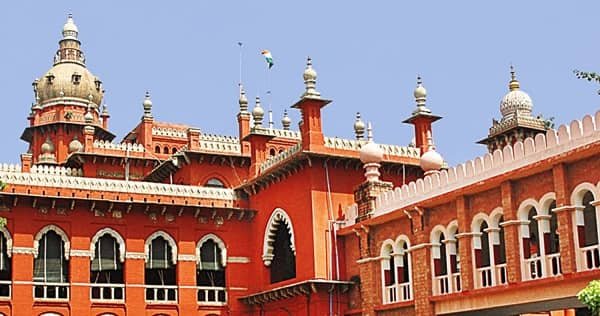
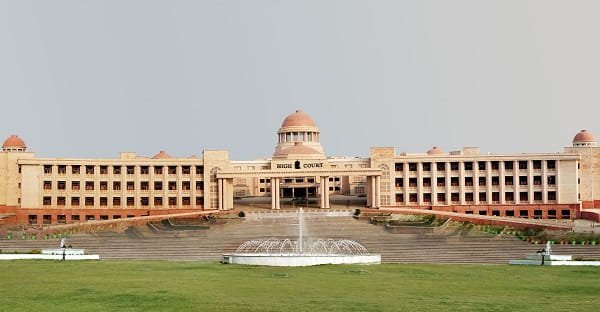
The Principal District and Sessions Court Bilaspur — the apex trial court for the Bilaspur district in the state of Chhattisgarh — occupies a position of extraordinary constitutional significance in India’s judicial history: it is the only district court in India that shares its city with the High Court of the state it falls under. The Chhattisgarh High Court is seated in Bilaspur — the same city as the District Court Bilaspur — making Bilaspur simultaneously a district court town and a High Court town, a distinction it shares with very few judicial cities in India. Later on the State of Chhattisgarh came into existence on November 1, 2000. The High Court of Chhattisgarh at Bilaspur was established on November 1, 2000. The Honourable Justice W.A. Shishak was the first Chief Justice. Under the Chhattisgarh High Court’s supervision, the Bilaspur District Court carries a judicial heritage stretching back to the Central Provinces era of British India — one of central India’s most historically documented district judicial traditions.
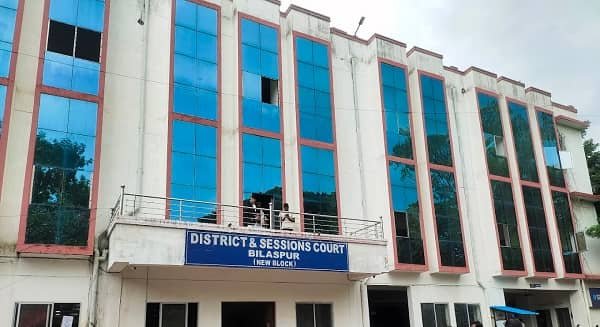
History
Bilaspur District belonged to the Chhattisgarh Division of the Central Provinces and is situated between 21 degrees 37 and 23 degrees 7 north and 81 degrees 12 and 83 degrees 40 east. The District occupies the northern portion of the Chhattisgarh plain or upper basin of the Mahanadi and includes also a large tract of hilly country to the north.
The District was included in the Chhattisgarh division and was under the supervision of the Commissioner of that Division. It was within the jurisdiction of the Divisional Judge of that Division who was the Sessions Judge. All the courts were subordinate to the Judicial Commissioner at Nagpur. In British era, the District Judge would either be a Barrister-at-Law or a member of the Indian Civil Services. Shri Laxmi Narayan Agarwal was the First Indian District and Sessions Judge. He joined as District and Sessions Judge in the year 1922.
A landmark in Indian legal history was achieved in Bilaspur — Lok Adalat for the first time in Madhya Pradesh was inaugurated in Bilaspur in the year 1987. Honourable Justice J.S. Verma, the then Chief Justice of the MP High Court, had inaugurated this function. Justice J.S. Verma subsequently became the Chief Justice of India and is remembered as one of India’s greatest judicial reformers.
Under the Government of India Act enacted in the year 1935, the High Court of Nagpur was constituted on January 2, 1936, and as such the Divisional Judge of the Chhattisgarh Division came under the jurisdiction of the Nagpur High Court. After the formation of Chhattisgarh, the Korba civil district was created on October 23, 2004, with cases pertaining to Korba, Katghora, Pali, Hardi Bazar, and Kartala tehsils transferred to District Court Korba.
Structure and Composition
| Dimension | Detail |
| First Indian District and Sessions Judge | Shri Laxmi Narayan Agarwal — joined 1922 |
| High Court Nagpur jurisdiction | From January 2, 1936 |
| Chhattisgarh state formed | November 1, 2000 |
| Chhattisgarh High Court established | November 1, 2000 — at Bilaspur |
| First Chief Justice of CG High Court | Justice W.A. Shishak |
| Location | Bilaspur, Chhattisgarh |
| High Court supervision | High Court of Chhattisgarh, Bilaspur |
| Unique distinction | Only district court sharing city with state’s High Court |
| Korba carved out | October 23, 2004 — separate District Court created |
| Sub-divisional courts | At Mungeli and Pendra — under Bilaspur Revenue District |
| Historic milestone | First Lok Adalat in Madhya Pradesh — 1987 — inaugurated by CJ J.S. Verma |
| Court types | District and Sessions Court, Additional District Courts, CJM Courts, Family Courts |
| Digital services | eCourts Mission Mode — Jitsi Meet virtual hearings, e-filing, DLSA legal aid |
Architecture and the Judicial Capital Identity
Bilaspur’s distinction as the seat of the Chhattisgarh High Court — a purpose-built High Court complex at Bodri, Bilaspur, inaugurated on November 1, 2000 — gives the city an institutional judicial character that makes it the judicial capital of the youngest state in India’s central belt. The Principal District and Sessions Court functions within this judicial capital landscape — a district court operating in the shadow and proximity of the state’s apex court, with the practical benefit that appellate access from district level to High Court requires no travel beyond the same city.
The court’s jurisdiction over the Bilaspur Revenue District — including sub-divisional courts at Mungeli and Pendra — spans a district whose geography encompasses the Chhattisgarh plain’s agricultural heart along the upper Mahanadi basin and extends into hilly terrain to the north. The DLSA Bilaspur provides legal aid services within the complex, and virtual hearing facilities through Jitsi Meet — adopted and maintained with published links on the court’s official portal — have been particularly significant for Chhattisgarh’s vast forested and tribal areas where physical court access remains logistically challenging.
Frequently Asked Questions
Q: What makes the Bilaspur District Court constitutionally unique?
A: It is the only district court in India that shares its city with the state High Court — the Chhattisgarh High Court is also seated in Bilaspur.
Q: When was the Chhattisgarh High Court established at Bilaspur?
A: November 1, 2000 — simultaneously with the creation of Chhattisgarh state, with Justice W.A. Shishak as first Chief Justice.
Q: Who was the first Indian District and Sessions Judge at Bilaspur?
A: Shri Laxmi Narayan Agarwal — joined in 1922.
Q: What historic legal milestone occurred at Bilaspur in 1987?
A: The first Lok Adalat in Madhya Pradesh was inaugurated in Bilaspur by then Chief Justice J.S. Verma.
Q: Which High Court supervises the Bilaspur District Court?
A: The High Court of Chhattisgarh, also located in Bilaspur.
Q: When was the Korba District Court carved out from Bilaspur?
A: October 23, 2004 — when the civil district of Korba was created and cases from five tehsils were transferred.
Q: Where are the sub-divisional courts under the Bilaspur District Court?
A: At Mungeli and Pendra — both within the Bilaspur Revenue District.
Q: What digital facilities are available?
A: Virtual hearings through Jitsi Meet, e-filing, eCourts portal integration, and DLSA Bilaspur legal aid services.