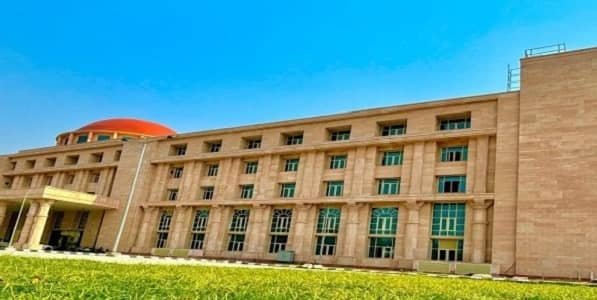
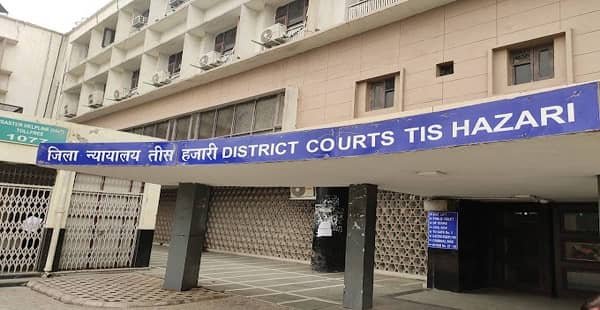
Tis Hazari Courts Complex — located in Central Delhi, a short distance from Civil Lines, and named after a Persian term meaning thirty thousand — is the oldest, largest, and most historically significant district court complex in the National Capital Territory of Delhi. Inaugurated on March 19, 1958, the complex functions as the principal court building of Delhi and has served as the foundational institutional infrastructure for Delhi’s district-level justice delivery for over six decades. Under the administrative supervision of the Delhi High Court, Tis Hazari currently exercises jurisdiction over Central Delhi, North Delhi, and West Delhi, and attracts an extraordinary footfall of over 50,000 litigants and legal professionals on every working day — making it one of the busiest district court complexes in India.
History
The name Tis Hazari carries a historical resonance that predates India’s independence by more than two centuries. In 1783, a force of 30,000 Sikh soldiers — Tis Hazari meaning thirty thousand in Persian — led by military General Baghel Singh camped at this location before the Battle of Delhi during their campaign in which they captured Saharanpur and overran the territory of Najib-ud-Daulah. General Baghel Singh subsequently set up an octroi post near Sabzi Mandi to collect taxes for constructing Sikh temples — and the area retained the name Tis Hazari from this historical encampment.
Construction of the Tis Hazari Courts Building commenced in 1953 at a cost of Rs 85 lakh. The building was inaugurated on March 19, 1958, by Chief Justice Mr. A.N. Bhandari of the then Punjab High Court. At inauguration, the building housed all civil courts and many criminal courts of Delhi under one roof — serving as the only district-level courts complex in the National Capital. Criminal courts functioning at Parliament Street were later shifted to the Patiala House Courts Complex in March 1977. The Karkardooma Courts Complex was inaugurated on May 15, 1993, and courts with jurisdiction over Shahdara and the eastern districts shifted there. The Rohini Courts Complex was completed in 2005, taking jurisdiction over North West Delhi and Outer Delhi.
Structure and Composition
| Dimension | Detail |
| Inaugurated | March 19, 1958 |
| Inauguration by | Chief Justice A.N. Bhandari — Punjab High Court |
| Construction began | 1953 |
| Construction cost | Rs 85 lakh |
| Location | Tis Hazari, Civil Lines, Central Delhi |
| Current jurisdiction | Central Delhi, North Delhi, West Delhi |
| Daily footfall | Over 50,000 litigants every working day |
| Bar Association | Delhi Bar Association (DBA) — one of India’s oldest and largest |
| Libraries | 5 libraries for lawyers + 1 library for judicial officers |
| Bank and post office | State Bank of India + Post Office within complex |
| Government Treasury | NCT Delhi Treasury housed in the complex |
| Other functions | 9 courts including Family Courts at Ground Floor |
| Extension building | Commercial Courts, Digital Courts, MACT courts |
Architecture and Facilities
The Tis Hazari Courts Complex is a multi-storey, multi-building judicial infrastructure complex that has expanded significantly from its original 1958 structure through successive additions reflecting the exponential growth of Delhi’s population and litigation over more than six decades. The main building is a robust, institutional-style mid-century structure whose practical design prioritises functional court space over architectural ornamentation — a deliberate choice for a complex designed to serve the demanding logistical requirements of district-level justice delivery in India’s capital.
Courts are distributed across the complex’s floors in organised manner — nine courts including Family Courts at the Ground Floor, 17 courts at the first floor, 14 courts at the second floor, and 16 courts at the third floor, with administration and judicial branches housed at the second floor. The Extension Building houses Commercial Courts, Digital Courts for NI Act matters, a Digital Traffic Court, and Motor Accident Claims Tribunal courts. The Annexe Building houses additional NI Act courts.
Beyond courtrooms, the complex is virtually self-contained — it houses the Treasury of the Government of NCT of Delhi, a State Bank of India branch, a post office, five libraries for advocates, and one library for judicial officers. The Delhi Bar Association, one of India’s oldest and largest bar associations, is housed within the complex, giving it the institutional weight of a legal community organisation with thousands of registered members.
The complex also maintains digital court infrastructure — Digital Courts for online proceedings, e-filing capabilities, and video conferencing links — reflecting the Delhi High Court’s consistent investment in modernising the Tis Hazari complex to keep pace with the 21st century’s requirements for accessible, efficient, and technology-enabled justice delivery.
Frequently Asked Questions
Q: When was the Tis Hazari Courts Complex inaugurated?
A: March 19, 1958 — by Chief Justice A.N. Bhandari of the Punjab High Court.
Q: What is the origin of the name Tis Hazari?
A: It derives from the Persian term for thirty thousand, referring to the 30,000-strong Sikh army of General Baghel Singh who camped here in 1783.
Q: What was the construction cost of the building?
A: Rs 85 lakh — with construction commencing in 1953.
Q: Which districts does Tis Hazari now serve?
A: Central Delhi, North Delhi, and West Delhi.
Q: How many litigants visit Tis Hazari daily?
A: Over 50,000 litigants every working day.
Q: What bar association is housed at Tis Hazari?
A: The Delhi Bar Association — one of India’s oldest and largest bar associations.
Q: What facilities are available within the complex?
A: Five lawyers’ libraries, one judicial officers’ library, State Bank of India branch, Post Office, NCT Delhi Treasury, and a full range of court types including Family Courts, Commercial Courts, Digital Courts, and MACT courts.
Q: What other Delhi court complexes were created after Tis Hazari?
A: Patiala House (criminal courts shifted in 1977), Karkardooma (1993), Rohini Courts (2005), and Dwarka Courts Complex.